RESTORATIVE-YIN YOGA involves supported body/mind relaxation. This is gentle, gentle yoga that promotes deep relaxation for stress reduction while also stretching and rehabilitating connective tissue.

Monday, June 23, 2014

Global Reach & Teaching


ISLANDS OF GRACE has a global reach that is consistent, with month-to-month returns.

The material presented in posts in this blog to date have perhaps enough content for a couple of booklength manuscripts.  The subject matter ranges from the practical “how-to-do” (basic intent, sequencing, relation to physiology and health) to subtle body-mind-spirit.  But the best way to experience it is directly.

If you can raise enough dollars to cover basic roundtrip flight and provide no-cost very basic rooming, I can provide restorative and soft power practice, and since I am there, experience in varieties of meditation, guided imagery/relaxation, gentle martial taichi and aiki, as well as a little more concentrated facilitator training in this dimension of yoga (as well as other aspects such as shamanizing and spiritual ecology).

Let’s practice together.

Contact me at lkinseth@yahoo.com  

Saturday, May 3, 2014

A Celebrant Life


New Melleray Abbey

IN 1970, in researching freedom in community, I accompanied my graduate professor George A. Hillery Jr. to New Melleray Abbey.  Upon arrival, a monk who greeted us noted that they should have invited Dr. Hillery up last week for a celebration.  A brother had died.

Life can be everyday, which is really to say, routine.  And yet, life occurs in a vast, very concrete, yet magical context.

To enter this world within the everyday world, the life of the monastery creates a life of disciplined freedom.  We typically think of freedom as a “freedom of alternatives”—the opportunity to do anything that we want whenever we want.  Dr. Hillery was exploring the presence of “freedom” within discipline.

Body-mind practices that occur in everyday life are often the outcomes of the heritages of monasteries, ashrams, hermitages and martial academies.  Such practices carry forward a life of disciplined freedom into everyday life.

However, body-mind practices can morph into more popularized ”watered-down” activities that continue to have more of the taste of the everyday than something profound.  The original intent is lost and even distorted.  Intensity of workout might become synonymous with sacred.

Body-mind practices such as yoga are more than postural workouts.  They are designed to access being-ness more than personality, and to be integrative and connective rather than exclusive. They aspire to dis-identify with egoic self, and to expand identity beyond ego.

Body-mind is not just fitness or even health. Such a transformation can optimize health, but its main objective is to integrate body and mind to touch spirit.  For B.K.S. Iyengar, yoga is celebrant and asanas are approached as prayer.

As celebrant, body-mind practice is

·      A praise of life,
·      Connection with the sacred,
·      Assertion of oneness/inclusion,
·      Witness to wonder,
·      Recognition of the enduring and transcending qualities of living such as compassion and harmony,
·      The carrying forward of heritage more than rote mimicry of tradition,
·      Deep balance, and
·      Surrender.

When this occurs, life is celebrant and this can outspread into everyday life. 

Tuesday, April 29, 2014

Wild Grass Za


How Much Does Your Mind Weigh, 19”x33, acrylic/panel

[A leaf weighs less than a gram.  The moon’s mass weighs perhaps 7.34x1025 grams.
How much does your mind weigh?]

MONDAYS

UNITY CHURCH 414 31ST

12:25 PM
(After Restorative-Yin Yoga)
Beginning 4/28/14

Brief Za
{“sitting, at rest” / meditation, followed by brief walking meditation}

?’s: Lance Kinseth/lkinseth@yahoo.com

Sunday, April 27, 2014

Intensity: Authentic


THE IDEA OF INTENSITY is glorified—seen as pushing yourself until you give up enough ego, driven to the point of being exhausted enough, that something breaks through the everyday ritual/routine to open a deeper place to which yoga aspires to enter.

Ashtanga into “Power,” or a more generic “edge” or “pain as information” come to mind.

Power yoga is “power ignorance.”   Ashtanga is “half-ignorance.”   “Great yoga gurus” [revered to the point of godliness] have taught this to transcend ego.  And so have martial practitioners, sports performance folks and others.  It is presented as a way to come so deeply out of the everyday routine that one finally “gets it.”

Well, if you want to set a performance “record,” it works.  PAIN, Pain, pain, or really, no new record--More weight lifted, faster speed. more miles run and faster.  But it fits with all of the erroneous aspects of spiritual practice.  Talk some to these “winners,” and you discover anxiety and/or obsessive personality to the point of often taking medication (that the workout tries to replace and that drives continual workout and anxiety if missed), and no real transformation other than they are “better” than someone else.

Authentic intensity does exist.

It is much more of a “middle way.”

Intensity is more of a shift in quality.  One might be illiterate and standing in a market and hear some short phrase.  But the intensity in that moment was exemplary.  No exercise, no meditation, no yoga.

“Bullshido” to those who work and work and get more flexible and faster and even more compassionate and think that they are nearing the goal.  Bullshido and more to the damage that this done (not just a little gain or neutrality). 

In monasteries of all sorts—Buddhist and Christian—most work hard and very disciplined, and they are the better for it, but almost no one awakens.  And so they practice and teach more effort. 

Hard work is predominantly yoga today (and likely in the past).  “Two more weeks,” and there is a difference, and so, true believers are born.  But all of this work is, paradoxically, facile, which is to say “too easy.” Muscles and flex may change but mind may remain rather empty.

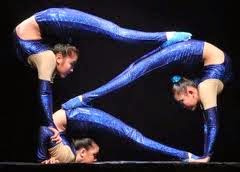
You want to see intense flex and strength?  Is the ability to turn your feet deeply inward yoga?  It was astonishing to me to hear the talk of frequent injury in yoga.

Go to contortionists, gymnasts and cheerleaders.


Sunday, April 13, 2014

Yoga & Nature: An Invitation


wallpaperswide.com


This post, Yoga & Nature: An Invitation, appeared in the quarterly magazine, YogaIowa, Spring, 2014. [Image on left is a mock-up of a cover not used.  Image on right is article as it appears..] For $15 annual subscription, subscriptions@yoga-iowa.com, or perhaps search Facebook, YogaIowa.

GOING “OUT INTO” nature to practice yoga may seem to bring nature more into our practice, and yet it is somewhat of an illusion, if you grasp what both yoga and nature are about. 

We are deeply lost in nature so that there is really no “outside.”  Present as the driving force in ancestral yoga is a sense of the body-mind [“the little universe"] aspiring to come into harmony and balance with the larger universe for optimal health and human development and gratitude. 

The Earth is in our practice.  A praise of the sun—the 12 asanas of traditional Surya [sun] Namaskar--is basically the heart of what we term "vinyasa flow."  Perhaps go to YouTube and view videos of Indian practice of Surya Namaskar to grasp its profound depth.  And there are other sequences that explicitly attend to the natural such as, for examples, the “Earth Sequence” and a related “Grounding Sequence” and Chandra [moon] Namaskar and “The Sequence To The Four Directions” and for some, facing East [the rising sun] or North [polar magnetic lines]. It is difficult to be around the yoga community and not find a rich eco-sensitivity involving a general affection for nature and specific individual and communal and public actions to reduce one’s “eco-footprint” [i.e., the consumption of natural resources]. This sensitivity extends into everything, into natural fiber clothing and bamboo flooring and most other products, as well as practice and presence in unbuilt landscapes.  Practitioners may go deep enough to ask as Ganga White does in Yoga Beyond Belief,
            What if the temple was the earth,
If forests were our church
If holy water—the rivers, lakes and oceans

While eco-sensitivity is important, it does not equal eco-literacy.  We will likely never have holy water if we sense ourselves standing outside nature.  In our eco-literacy, water might still remain a “resource.”  And might will continue to perceive ourselves to be “domesticated,” not “wild.”  We become our words.

 “Ecology” is a rather new term, becoming popularized in 1970 with our view of Earthrise over moonscape.  As theologian Thomas Berry has suggested in The Great Work, our renascent task in this era is to integrate into the larger Earth community.  Because it is so body-mind, yoga can play a role in both transforming our sense of the nature of health and this eco-integration. 

As Henry Beston noted in The Outermost House, We hunger for fire [the elemental] before the hands, because we are fundamentally from nature and know it in our heart of hearts.

Now, especially for those coming into wondrous Spring in the Northern Hemisphere, as the whole Earth increasingly tilts toward the sun, and we become sensitive to the rich changes around us, we might invite Earth deeply into our practice.

            And I suggest…,
that your spirit grow in curiosity, that your life
            be richer than it is, that you bow to the earth as
            you feel how it actually is, that we—so clever, and
            ambitious, and selfish, and unrestrained—are only
            one design of the moving, the vivacious many.
                        Mary Oliver, from “ The Moth, The Mountains, The Rivers,”
                        A Thousand Mornings [33]
_________________________________________________

NOTE: As our eco-literacy begins to include us, perhaps we will begin to see how even our global urbanization [that can appear to be so separate from nature and artificial as to be almost the destructive antithesis of nature] has not only major ecologically adaptive features but also is wild and still young in the Earth ecosystem. [For further exploration of this possibility, perhaps search cityasecological.blogspot.com] 

Wednesday, February 5, 2014

Coming To The Mat


Lance, Kinseth, Adho Mukha Shavanasana II

THE FIRST XCELLENCE of yoga, simple yet subtle:

“Coming to the spin bike” or to the treadmill or step machine, or to oh so soft tai chi or harsh tire-tossing MMA provokes experiences that are atypical.  A step out of the everyday routine to “exercise” will produce a rich qualitative shift out of the everyday.  And when the activity is completed, the endorphins kick in, and a little, beautiful, eloquent “high” is received, but likely not the 1st Xcellence of yoga.

In “body-mind” work, (different from “fitness,” but, of course, most “pop” yoga is really fitness, appealing to youthfulness and testosterone, profound qualities are the very reason for body-mind work.

  • Stillness: Calmness, quietness, relaxation vs. “fast & furious &/or hot, Hot, HOT.  Stillness offers a “Relaxation Response” that you don’t get in fast & furious, and also, an intense, very real, abrupt sensory shift producing diverse physiological changes that optimize health, affecting cardio/vascular [down to the micro vessels], neuro-, neuro-endocrine, lymphatic, and “energy” channels [Eastern] and  anti-anxiety and anti-depressant chemicals.

  • Threshold: In the concrete moment, and yet, a profound step out of the everyday:  Cross through the doorway leading to the yoga practice area, and you step across a threshold, if you get it.  In any body-mind—tai chi, aiki, yoga, and qigong, a tep out of the everyday, and into, where?  Where is it that you have allowed yourself to arrive?

  • Beingness: Letting go roles and agendas for a time—Dis-identification.  Stepping outside habitual consciousness: Roles or vocation, age, gender, ethnicity/race dropping off.  Transformation vs. discrimination.
  • Transpersonality: Everyday life expresses a larger life [that C. G. Jung associated with archetypes (i.e., themes underlying everyday decisions, such as marriage as "the way of all flesh," rather than being some unique, individual action) or Vietnamese Zen master Thich Nhat Hanh’s “interbeing,” or radical psychiatrist R. D. Laing’s  “inter-experience.”]  This is deep body-mind.

  • Intuition:  As the body calms and respiration transforms from perhaps 12-18 respiration cycles per minute to six or less, the body chemistry flips mind from everyday “chatter” to a more in-depth language.  And so, if one were to speak, the content would be more heart-felt.  Response then becomes more spontaneous, AND may come from a deeper intelligence.  Language that, heretofore, seemed imaginary or effusively hopeful, may become imaginal or from a deep place.

  • Invitation: Instead of an agenda, such as getting more fit or flexible, seeing what appears, without checking it.  The image that appears may be “too simple” or “confusing/I don’t get it.”  But skipping that admonition in yoga to set an “Intention” or “goal for practice” may open a door where there didn't appear to be one [less cultural or personal, but deeper, unexpected, creative, and rich].

Yoga can become a practice of expectations that has little to do with “body-mind” or “yoga.”

Quiet, calm, still.