RESTORATIVE-YIN YOGA involves supported body/mind relaxation. This is gentle, gentle yoga that promotes deep relaxation for stress reduction while also stretching and rehabilitating connective tissue.

Tuesday, November 19, 2013

Restorative Yoga Practice In Des Moines

ekagrayoga.com

Lance Kinseth offering RESTORATIVE-YIN YOGA practice, Wednesdays 10:30-Noon, Unity Church, 414 31st Street, Des Moines, Iowa, beginning 12/4/2013.

RESTORATIVE-YIN YOGA involves supported body/mind relaxation.  This is gentle, gentle yoga that promotes deep relaxation for stress reduction while also stretching and rehabilitating connective tissue.

The quiet and calm poses of restorative-yin yoga offer islands of grace.
See Islands Of Grace blog that is followed globally: 
http://santosharestorative-yinyogajournal.blogspot.com


Tuesday, October 22, 2013

A Mind Like Compost

Lance Kinseth, 2007

            On Top

All this new stuff goes on top
turn it over     turn it over
wait     and water down.
From the dark bottom
turn it out
let it spread through, silt down,
even.
Watch it sprout.

A mind like compost.

IN AXE HANDLES, poet Gary Snyder describes an Earthen process that can also be a high mental process.  This mental process can be optimized by the intention to calm and quiet and slow that is central in body mind practices such as restorative yoga.  The barrage of moment-to-moment stimuli that is “on top” is not really the heart of the matter.  Stilling, turning it over, inviting it to spread throughout, to silt down, entering and opening the depths, then recreating, creating, transforming.


Listening Point

Lance Kinseth, 2011

LISTENING, NOT KNOWING: Everything that we “know for sure” is subject to be radically overturned.  The very nature of the universe(s?) will remain beyond our capacity to ever sense.

And in everyday life, everything that we might experience as constant, wondrous or even static and boring, is a stream of change. Even across the time span of a few months, personal, societal and environmental consequences will occur that we cannot foresee.  Commonality is a measure of our limits rather than life at it is.

How to live in such uncertainty? 

Listening, remaining alert to the changing conditions of existence, is the core of a wild state that optimizes the sustainability of each species. 

With senses pulled in many directions at once, coming to a listening point may optimize alertness.  Overall, this action offers to reduce the sensory overload so that we might not overlook resources and actions that are optimal.

This listening point centers us just enough to come inside our experience rather than just look at it or, most of the time, overlook it.   We then stand to not finally know, but rather, to invite and to listen to that which appears, we optimize in our general capacity to connect, and we just might improve our capacity to come into harmony, integrate and adapt and transform.

Body-mind practices often arise to essentially create a listening point.  Rather than being just a borrowing or an age-old way from modern “exercise” or “stress reduction,” such practices can provide a listening point that steps out of the everyday for at least moments if not more.  Many moments of body-mind practice or “repetition” may flower into awareness of increasing integration with events that had, heretofore, seemed separate and unimportant.  Then, subtlety and grace become visible in the movements and poses of practices such as tai chi, qigong, meditation, and very gentle yoga.  And if they are authentically subtle and graced, there is much more going on with everyday activities such as work and cooking and cleaning and relationships to others and to landscape.

Perhaps the crucial element of body-mind practice involves cutting through the chatter of the continual rain of sensory stimuli and thought.  Slowing to stillness and calmness optimizes this process.  And, paradoxically, doing less, a switch is flipped, and a profound acuity and physiological action might be triggered that optimizes a listening point.

Body-mind practices tend to cut through routine and place each of us at a center point of sorts, an “in-between.” On a very basic level, each inhale might penetrate inside us, and each exhale connects or integrates and expands into our experience. In the body-mind practice of gentle yoga, when we cross a threshold from the everyday to the mat, to the place of practice—our initial stilling of the body-mind, perhaps followed by breath work, takes us out of the chatter of discriminating self into being-ness.  Rather than self and other, we might shift to Being-ness & Cosmos.  Then, each breath is more that “air.”  It extends into the infinity of cosmos.  We might go both inward and outward.  There is a listening point, a center point and this point is a prayer of sorts, a call inviting something deep that we literally need and should not be ashamed to seek, rather than exercise or stress release.


Sunday, September 15, 2013

A Hidden Intensity In Restorative-Yin Yoga

Lance Kinseth, 2013

A VERY EARLY Islands of Grace Post  [3/3/2011] sketches a restorative-yin yoga sequence.  But just doing the poses may still mask an essence that is occurring in the sequences.  And understanding this essence can be a meta-motivator to regularly do this type of practice.

At the end of such a sequence, there is likely to be a feeling of deep relaxation.  But it might be interpreted as the result of simply doing less—almost “nothing”—rather than doing something.  And this “doing nothing” seems to have its primary benefit as passive stress relief.

One of the missing aspects in describing the poses in the sequence is the absence of the sensory experience of “flipping a switch” in human physiology.  A pratitoner may experience as sense of relaxation and calmness but may miss a hidden intensity in this practice.

If done appropriately, “doing nothing” actually does a lot.  Done appropriately, there are major shifts in cardio/vascular, neuro-endocrine, lymphatic, Eastern energy that are POWERFUL.  Physiology can open to the micro-cellular level, and the chemicals produced to open vessels and transform endocrine response are extremely complex.  Such sequences, if done appropriately, are, in a very real way, “hard” in the power of their impact rather than beings so soft as to be little more than a respite from stressful life.  Such sequences are extremely active and approximate the higher ends of yoga and meditation.  They are not just “meditative” or “esoteric” or “aesthetic” or “spiritual,” or some sort of generic physiological “relaxation respite,” but rather may be concretely physical/physiological, specifically therapeutic/restorative to specific body parts, and optimal health.

And so, the essence is not the body pose or “technique,” but rather, the unfelt changes [albeit measurable on CT scans and in blood chemistry, HR, BP, EEG, EKG, down to micro measures, such as opening micro vessels on blood vessels or optimized oxygenation of the outer reaches of brain tissue/appendages [vs. contraction to the the body core in intense exercise], or the reduction of demands on the neural-endocrine systems to allow more attention to monitoring subtle process such balancing/regulating salt levels in billions of cells and blood.

And so, when doing restorative-yin sequences, it can be helpful to realize the ultimate objectives are not simply finding tome to relax or to do ease poses.  When done appropriately, restorative-yin yoga is profoundly complex, profoundly active [i.e., flipping a switch from the sympathetic nervous system to the more stress-reducing para-sympathetic system]. And this, in turn, may not only serve optima physiological health, but also open a gateway into the esoteric/aesthetic/spiritual dimensions of human experience that may be tasted, but are never attained in a more active process.

This restorative-yin yoga process can be extended into most other yoga poses, if those poses are done slowly, holding the poses, breathing deeply, and doing sequences of related poses. In fact, it is possible that modern yoga may evolve into a process of slow, deep comprehensive stretching and, thus, escape the limits of a fitness model.

Globally, almost no one is doing restorative-yin yoga.  If it is to be effective, the modern world has rationalized that yoga must essentially be a fitness/workout model.  More active yoga, while not “wrong,” can counter such optimal, restorative dimensions.
While a “workout” approach to yoga is not wrong, it is narrow and often does not accomplish many of the objectives that it seeks to attain, such as weight loss, aerobic conditioning or healing/physical therapy [in fact, frequently producing injury].  


Tuesday, September 3, 2013

Suppleness

from pinkbluelovescute.com

“FLEXIBILITY” IS PERHAPS the most common physical aspect that is associated with yoga.  It is a quality to which practitioners aspire, as well as a quality that discourages and drives potential participants away. 

Our sense of “health” is evolving and changing, and so too, the concept of “flexibility.”   In this evolving sense of health, flexibility involves more than being able to touch one’s toes or head to knees.  Health is evolving from “fitness” through a more comprehensive “wellness” (that includes nutrition and stress reduction, and may stress functionality more than fitness’ strength/power) to an “optimal health” or “thriving” (vs. “surviving’). 

[For a look at the evolution of health, see Islands Of Grace post, “Thriving: Toward The Cutting Edge of Health, 4/18/13.] 

In optimal health/thriving, there is a transformation from an emphasis on “skeletal flexibility” to a more holistic suppleness of the body.

The term suppleness expands “flexing” to describe a process of opening the entire body rather than emphasize stretching and strengthening muscle and connective tissue. Attention to suppleness directs actions to
  • Muscle and connective tissue, and
  • the internal organs of the central body,
  • and the micro-structures of all cell tissue (with special attention to opening the fringes of the body—the outer edges of the brain and appendages—).to open cardio- and neuro-endocrine- and, lymphatic- and Eastern energy channels.
from catalog.nucleusic.com
[Example shows the difficulty of trying to illustrate the gross complexity of the chest/shoulder (with no regard to the complexity of the micro-anatomy of this body region).  The lymph system is not illustrated yet present, nor is the more visible muscular/ligament structure that tends to be the most conscious aspect.  The density of tissue [bone, muscular, vascular, nervous] illuminates the need for suppleness as crucial to allow openness in such density.]

Traditional fitness flexibility may either miss or even encumber efforts toward suppleness.  Suppleness leads to activities that release body tension by “flipping a switch” to engage the parasympathetic nervous system.  Real “hip openers” and opening the “floating bones “ of the upper back/shoulders and the lower back and neck aspire to free the body—softening the body—to optimize the flow of body physiology rather than lengthen and strengthen muscle and connective tissue.  Strong muscles may be hard and impeded and even injured.


from www.uic.edu
micro anatomy example


In suppleness, the “vitality” of blood vessels and nerve tissue and lymph channels would become crucial loci for intervention with a goal of vitalizing these tissues, by reducing restriction not only in the joints (where muscle and connective tissue require attention) but also in the central body and fringes—down to micro structures such as capillaries and even further into the regulation of optimal sodium levels in the body) and by making them more responsive by enhancing relaxation skills.

The slow, deep comprehensive stretching of restorative yoga, yin yoga and soft power yoga fit well with this evolving sense of health that emphasizes suppleness. These practices are quite different from the flexibility orientation of traditional fitness models that optimize sports performance.      

Wednesday, July 24, 2013

Awaken

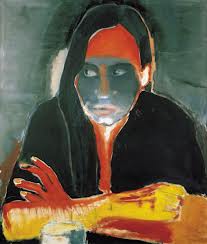
M Dumas painting
WHAT IS OUR TRUE FACE, What is our true yoga? 

IF YOU ATTEND a modern yoga class in the USA [$10 to $15 per hour up to $65 unless you are a “celeb” and then it is much more, you are likely to feel like a piston in an engine.  Instead of stepping onto a treadmill or onto a step climber or doing a bike spin class, you go to yoga.  You go there as an aspirant—as a seeker of something physical and perhaps even spiritual—to become more flexible.  You have the aerobic working for you.  And after a class you, typically, feel something a little different—perhaps spiritual—but, typically, you do not return.  If you do return, you expect it to be a workout, not unlike what you have been doing, but honestly, and beautifully, you have expectations of something more, philosophical/spiritual. 

Let’s perhaps hold a pose such as “triangle’ for a muscle-burn trying to get your hand down to the mat while maintaining the straightened forward leg, and then it’s back to “vinyasa,” which translates into a quick “plank” (urdva chatruangdandasana) or “chaturanga” in “mass yoga,” pushing down  (which is quite different from chaturangdandasana), [“crocodile,” but not really, and then upward, pushing up into  “sphinx” or “up dog,” followed by flow into “down dog,” [“where we all meet”] and perhaps another round of “tri” [Utthita Trikonasana, of course, on the opposite side], followed by “taking a vinyasa,”  [We were just there, but we are going back again and again] and then moving into another pose such as “Warrior Two,” followed perhaps by “Reverse Warrior” [unless you are an animal or expected to be, into “”Warrior Three,” and [guess what] vinyasa.

Last Sunday, at a “yoga in the park” AND there, two weeks B4 at another “yoga in the park:” The above vinyasa, because this is what all yoga teachers are taught.  All sorts of funky poses were thrown in, such as “crow, because it is awesome.”  But ninety percent of the participants didn’t have a clue what “crow” was or how to do it, because yoga is now a mass yoga.  Forget “crow,” and nearly everyone fell behind in their basic “vinyasa,” so that they ended up feeling like they each pose they were doing was an  “ass-anana.”  I could read it in their faces.  Those who did keep up with the “flow” as I could do, were the exception.  This Sunday, it was Power yoga; two week before, astanga-rooted, with it wondrous world-championship vinyasa flow, as if this is the epitome of yoga.  So many, who were truly drawn to yoga, and entered this mass yoga, left, I am sure, both this Sunday and those on the latter Sunday, feeling “yoga is not for me.” 

We might espouse, as the two facilitators did, that yoga is for everyone.  And that is so true.  That it is beautiful, And the admonition to be smiling all the while is, again, true.  And yet, it is nearly impossible, given the orientation of, really, the MAJORITY of yoga instructors who may have limited training but just be good at facilitating a class and, really (from my experience) the “certified” [which is really to say registered with an organization] by virtue of spending 200—500 hours at perhaps $2600 per 200 hours.  From my experience, the most “trained” facilitators who would be likely licensed in the United States as yoga teachers are more like to injure more people than the less “certed.” 

I would argue that what is called yoga in the world in which I inhabit is not really yoga in the first place.  There is no opportunity to listen to the body, to open, to free the body rather than push, Push, PUSH to control the body.  Go to Vanda Scaravelli.

When I go to “yoga in the park” or a less costly “community yoga” [yes, because I am cheap], I expect to encounter the above dynamics of which I am critical, but I have not been once disappointed in finding the potential of injury.  Perhaps because I am attending the class, there is a drive by the instructor to “up the anty,” bu I don’ think so. I think this is really what they do.

And so, I would encourage people interested in yoga everywhere in the world to anticipate the above. 

I would encourage you to not be discouraged, to do your own practice, to go to a class and to really be intuitive, and not do all that facilitator demands. 

Recently I went to a class where headstands were a part of the sequence.  I saw people who were overweight as well as thin people.  The expectation from the head of the school was that anyone could do this across time, and that one might struggle tonight, but participants were encouraged to give it a try.  There were, as is often the case, a good number of students.  It might be the headstand in this class or the “wheel” pose in another, but the science of yoga suggests that even if you can do the headstand, and then do it for four years, suddenly, someday, you might have an experience of excruciating pain and never be able to do it again.  And an overweight person doing a wheel and perhaps being held up by an underweight person is something any idiot would be afraid to subject participant to, but not a “certed” teacher it seems.  And if you were to get “frisky,” and bend your neck a little more than usual (because you felt “really loose,” [especially in Bikram (hot) yoga, you might provoke a stroke because you compressed the vessels in your neck vertebrae.   So, at that point, congrats for attaining “uber-flex” at the cost of altering your life forever forward.  

As I moved deeper into yoga, it was astonishing to me to hear of all of the injuries caused by yoga, which had seemed to be to be something akin to zazen, “sitting, at rest.”

Congrats for “pushing the envelope” of Mod/mass yoga. 

Today, 7/24/2013, on a bike trail, not yoga but that same workout/fitness orientation, a young man flipped suddenly forward, cracked his helmet, passed out, had blood on his face, a torn jersey, blood on his leg, was “goofy,” but said that he had done this before, and had expected the second concussion that he has had to fee worse.  Push that heat up there.  Get those towels.  Enjoy the rush.  Yes, whip through those moves fast “to get fit” or to lose weight.  Bogus.  But someday, look up the actual aerobic impact and see that it equals a mild step on a treadmill.  Go yoginis, absorb all of the yoga B. S. you’ve been taught.  I know it’s likely the only yoga that you have seen, or even all that your facilitators have really seen for that matter.  Keep working with fervor.  Bring that body of yours under control.  It is what fitness is all about in 2013.  But fitness is so passé.   When you first get it, it will be about ‘wellness.”  But perhaps when your teachers get it—if they ever do—it will be about thriving.  I don’t see them really ever slow down, so take that, perhaps, as a strong clue.  If they are “power yoga” people or “Astanga, “ perhaps question it a little.  And then question all of your own words that lead you to “yoga”—all of the words that you use in yoga, such as “flexibility,” and find that they might just disappear and be replaced by real, real words that mean something.

In the future, perhaps I will offer a restorative-yin video and a soft power yoga video to show another yoga directive.
     

Thursday, June 6, 2013

Slow Cookin'

from sadhakafilm.net

“SLOW COOKIN’” popularly references a more eased step out of a frenetic approach to living.  And one result of slowing down the process can be a rich, complex and subtle flavor to the simplest of foods.

The same might be said for body-mind practice.  In yoga, slowing down and holding poses—‘cookin’ and ‘stewin’—offers rich health benefits such as the optimization of the parasympathetic nervous system and more rapid gains in flexibility, as validated by research on the effect of holding body position on spindle and Golgi release in muscle and connective tissue.

For B.K.S. Iyengar, holding poses was a crucial dimension of yoga that distinguished his approach.  And yet a variety of types of yoga (as well as other forms of exercise) claim similar or better improvements in flexibility and strength and bringing the body into alignment. 

But Iyengar’s major quest is likely more of a spiritual aspiration.  And stilling and holding poses—asanas—offers a gateway to the transpersonal.  Rather than simply personal benefits such as respite, physical health, release, centering, and/or the opportunity for personal insight, holding poses can be an act of surrender—a way or practice that comes into harmony with and that expresses a greater process.   And in the stillness, in the return to silence, there is an opportunity to experience a larger space and to shift from a specific consciousness to a more cosmic consciousness.

… a rich, complex and subtle flavor…

Paraphrasing very closely to Iyengar’s words:
Asanas are my prayers.  I give my gesture of affection through my
presentation.  I want that each and every cell should ring the bell
of the divinity.
[Iyengar in Lindsey Clennell, Sadhaka: The Yoga Of B.K.S.
Iyengar, film documentary currently in post-production.  See 
sadhakafilm.net or http://vimeo.com/62818591 to see video 
clip as well as help fund completion.]